












 Safety


Editor's Review
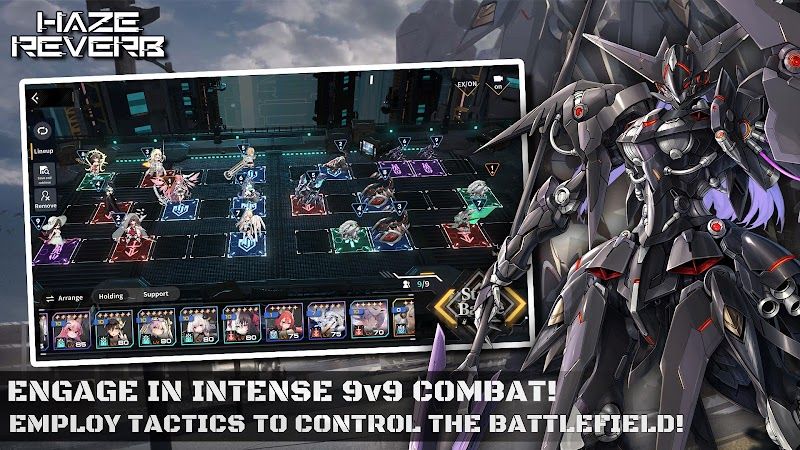
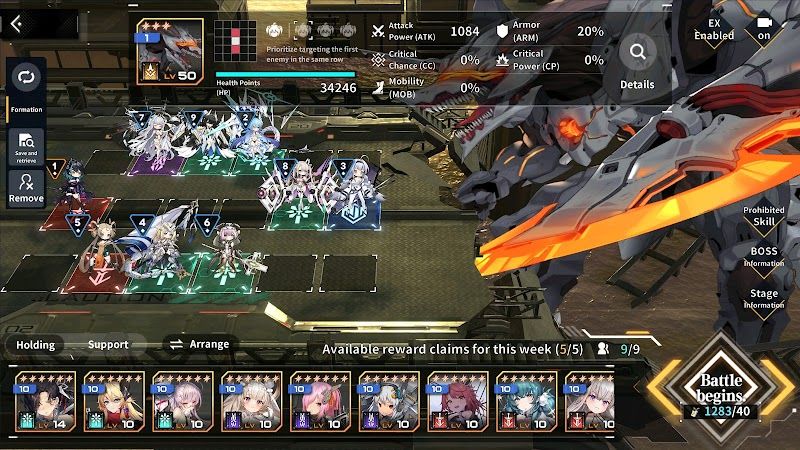
Haze Reverb, from GENNMUGAME CO., LTD., is built around a 9-vs-9 turn-based tactical combat system — meaning players can deploy up to nine “Giantess” units in a single battle. On paper, this design signals ambition: instead of a simple 3-unit or 5-unit team common among gacha games, Haze Reverb tries to let you command large-scale squads, promising depth via positioning, skill sequencing, and formation strategy.
The tactical setup has clear potential. Managing up to nine units can encourage experimentation with team synergies: mixing melee, ranged, and support-style Giantesses; arranging front-line tanks with back-row damage dealers or healers; timing abilities; and optimizing placement to account for enemy composition. This can give battles a “chess-board” feel — not just brute force, but thought and adaptability. When it works, this complexity feels satisfying: a well-coordinated squad can sweep enemies through tactical advantage, demonstrating the payoff for planning rather than random luck.
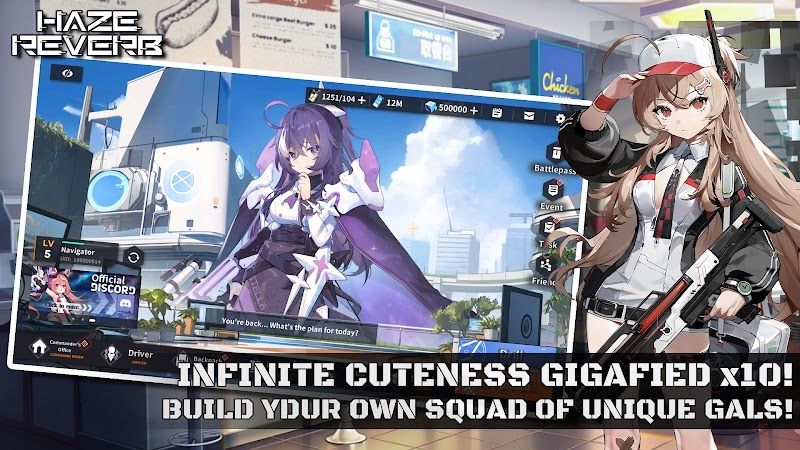
Moreover, for players attracted to scale and command, the concept supports the game’s “mecha-girl / giantess” motif: commanding a full squad rather than a handful of characters aligns with the idea of leading a special operations unit defending humanity. This contributes to immersion when the narrative and mechanics are in sync.
However, real-world reception of the combat system is decidedly mixed. Many players report battles feel slow and drawn out, describing the combat pace as “boring,” despite the promised tactical depth. Having nine units to manage in each fight can feel overwhelming rather than empowering. In some feedback, players say the game feels more like a “waifu-collector” than a strategic RPG — as though the giantess and squad mechanics are superficial, with much of the gameplay reduced to routine gacha pulls and auto- or minimal-control combat rather than deep, repeatable tactics.
Part of the problem seems to lie in how the mechanics are exposed (or hidden) in the UI and battle flows. There have been some reviewers who have stated that the game does not provide a clear explanation of unit roles (e.g. what characters are melee and ranged and support) before deployment and this the lineup choices are more of an educated guesswork, which is a waste of energy or resources in case a match goes wrong. Others claim that support and healer teams can usually feel that they are having little impact: their efforts in most combat scenarios are hardly felt at all, which makes it less motivating to put out a balanced squad and less tactical.
Additionally, a recurring complaint centers around “lack of reward to match time investment.” Some players find that despite long, tactical battles and complex squad management, the payoff (loot, progression, sense of accomplishment) is underwhelming. When the reward-to-effort ratio is weak, even a well-designed tactical system can feel hollow — particularly in a gacha game where character acquisition and progression are already heavily dependent on randomness and monetization.
Another structural weakness: because so many units are involved, the tactical identity of individual characters can get diluted. Players sometimes report that many Giantesses feel interchangeable; you can swap a few units without dramatically altering your tactics or outcomes. That erodes the incentive to deeply invest in any one character or to carefully optimize team synergy, defeating part of the purpose of a tactical system.
In short, the tactical combat and squad-based gameplay of Haze Reverb was a solid conceptual point of distinction between mobile gacha games. The system provides a substantial strategic level of interest to players who are ready to get into positioning, team composition and prolonged engagements. Conversely, an uneven implementation, slow pace, inadequate unit roles, poor value of support units, weak rewards, and diminution of identity of the individual character, is often the bane of that promise. Consequently, the fighting then becomes to most players more of a tedious obligation than a satisfying combat situation.
By Jerry | Copyright © JoyGamerss - All Rights Reserved
















Comments