










 Safety


Editor's Review
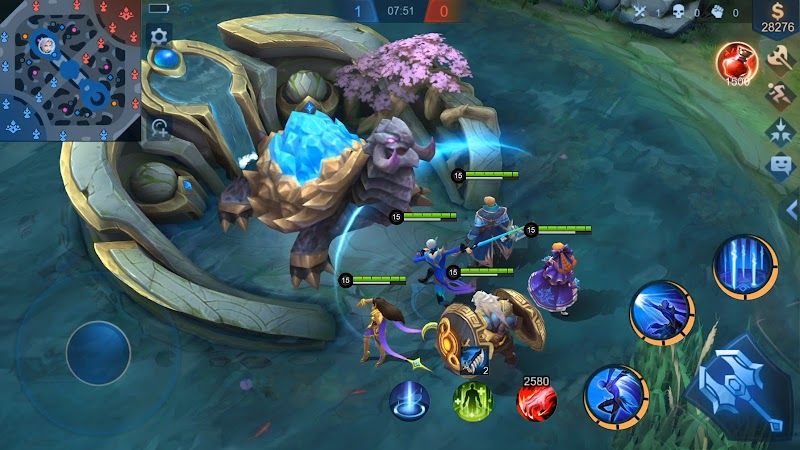
Mobile Legends: Bang Bang is a fast-paced MOBA action game that pits two teams of five players against each other to demolish the opposing base and traverse a three-lane battlefield that includes turrets, jungle monsters, and other strategic elements such as Turtle and Lord. In addition to the choice of heroes, there is also a rich pre-match customization layer in the form of its Emblem System and Battle Spell mechanics, which have a major influence on the gameplay but are considered controversial in the community.
The Emblem System enables the player to equip his or her heroes with base statistics and acquire special talents prior to starting a match. There are eight different sets of emblems: Physical, Magical, Tank, Jungle, Assassin, Fighter, Marksman, and Support. The highest level of each emblem is 60 and it takes a long period of grinding or financial expenditure. Levels 60-65 allow players to obtain the strong tier-three talents, which radically change play styles. To illustrate, the "High and Dry" ability of the Assassin insignia provides 7 percent of additional damage to enemies with no nearby allies, and as such serves as a helpful ability to heroes such as Hayabusa or Helcurt who focus on isolated assassinations. The Mage emblem restores 10% of maximum mana through its "Impure Rage", and does magic damage when skills strike, allowing heroes such as Kagura and Pharsa to be able to be continually at the lane.
Another customization dimension is provided by Battle Spells. Players select between 12 spells such as Flicker (blink instantly), Retribution (clear jungle, taking of objectives), Execute (clearing low health opponents), and Vengeance (reflection of damage). These spells have their roles, junglers need Retribution to buy jungle gear and clean camps with ease, and mage midlaners normally use Flicker to position themselves. The asymmetric cooldowns also open up strategic windows; Flicker has a 120-second cooldown compared to Execute having a 90-second cooldown so time used to engage in an engagement due to the spell becoming available becomes vital.
The benefits of these systems are many-fold. They enable hero to be flexible one hero such as Chou may be tank with Tank emblem and Flicker or be assassin with Assassin emblem and Execute. This adaptability prevents stale builds and rewards creative theory crafting. The systems also add preparatory depth; experienced players gain edges by optimizing emblems and spells for specific matchups. A Marksman facing heavy dive compositions might take Purify instead of Inspire to cleanse crowd control, demonstrating how pre-match decisions require matchup knowledge.
However, significant disadvantages undermine these benefits. The emblem leveling grind creates pay-to-win concerns. New players that have level 20 emblems have to deal with opponents with level 60 (maxed) emblems, are numerically disadvantaged in terms of damage, defense, and other game-changing talents. Although, MOONTON has lowered the emblem expenditures with time, the framework continues to reward veterans and pay players, which goes against what MOBAs is supposed to be founded on, competition based on skill.
The Battle Spell system occasionally limits diversity rather than enabling it. Certain role-spell combinations become mandatory—junglers must use Retribution, making the "choice" illusory. This rigidity removes potential strategic variation and punishes experimentation. Additionally, spell imbalances periodically emerge; when Flicker dominated with a 60-second cooldown before nerfs, it centralized gameplay around blink availability, reducing tactical diversity.
Furthermore, these systems add hidden complexity that confuses newcomers. Understanding why opponents deal more damage or survive unexpectedly requires knowledge of invisible emblem bonuses and talent effects, creating frustrating learning experiences where defeats feel unexplained.
In conclusion, Mobile Legends' Emblem and Battle Spell systems offer meaningful customization that rewards preparation and knowledge. However, they simultaneously create accessibility barriers and competitive imbalances that undermine the core skill-based gameplay. These systems excel at providing veteran depth while unfortunately alienating and disadvantaging newer players.
By Jerry | Copyright © JoyGamerss - All Rights Reserved

















Comments