











 Safety


Editor's Review
Malatang Master does something quite unusual for a mobile cooking game: it offers three disparate gameplay modes all under one roof. In this game, players can run a malatang shop, pack photocards with stickers and sleeves, and even take care of a digital doll-bathing her, feeding her, and tucking her into bed. On paper, this variety sounds incredibly generous. In practice, it opens up one very important question: does three combined mini-games really create one richer experience, or does it dilute each?
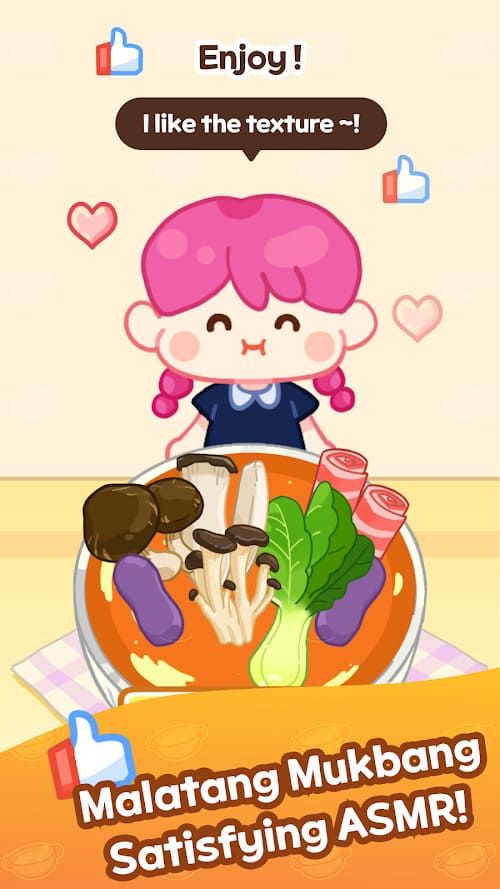
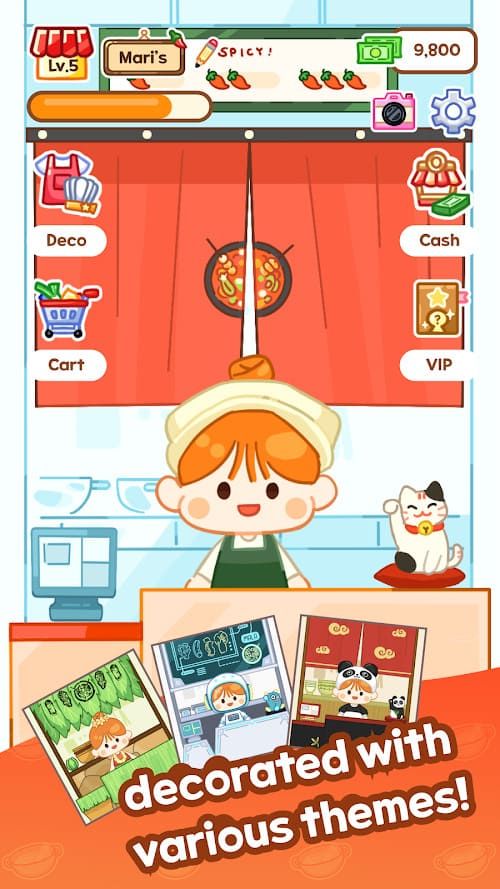
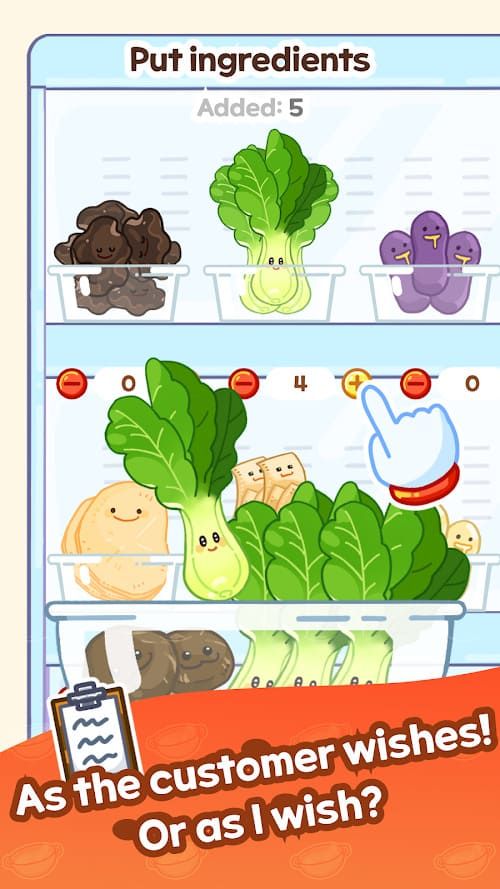
The core of the game is the malatang shop mode. Gamers choose between more than 30 ingredients including noodles, fishcakes, tofu, quail eggs, vegetables, and different meats and drop them into a bowl to fit the demands of more than 20 different customers. Every customer also has certain preferences being presented as visual order cards and the game gives you a reward when you match it. Usually, with every step forward, you unlock new ingredients and more demanding orders, creating a list of dishes made. There is also the opportunity to customize the shop with more than 50 elements: wall posters, furniture, and outfits to your character. Light continuity and repetitive gratification are the keystone of this mode, and as a result, it forms the basis of the experience.
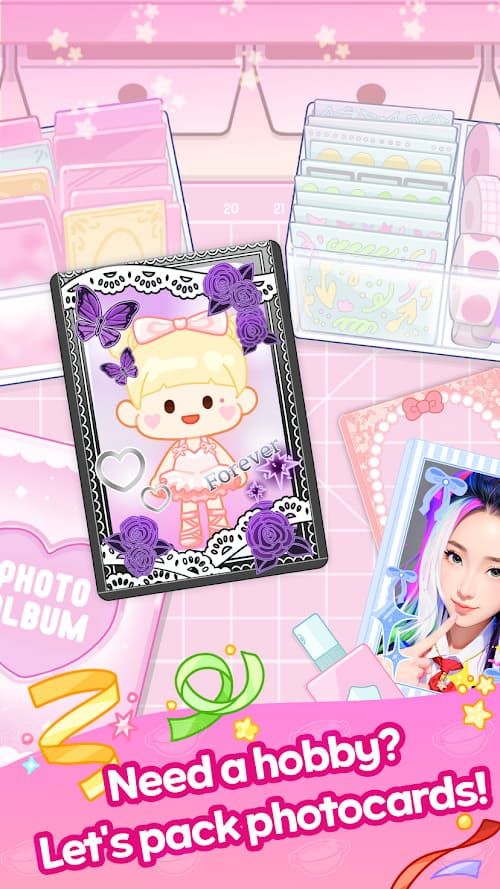
The photocard packing mode completely flips that on its head. You select a photocard, put it into a protective sleeve, and then sticker it up to look pretty-a simulation of the real-world personalization of collectible cards shared on social media by fans. It is tactile, soothing: plastic sleeves rustle, the peeling of stickers, the soft tapping as you push them all into place. It's purely cosmetic; there is no competitive or strategic aspect to it, and the players can share their creations with friends in-game.
The newest addition is the doll care mode. In it, players feed a virtual doll, bathe her with bubble and water sounds, then brush her hair and put her to bed. Similar to photocard mode, it's entirely separate from the malatang shop: there's no currency, progression, or narrative crossover. Its charm comes in the cozy, low-stakes ritual of caring for something small and cute, reinforced by gentle ASMR audio cues throughout.
The advantage of this three-mode structure is obvious: variety. Players tired of making malatang bowls can switch into packing cards or caring for the doll without leaving the app. Each mode has a different tempo and sensory focus, so the game can appeal to different moods. If you want something mildly active, you serve customers. If you want something purely aesthetic, you pack cards. If you want something nurturing, you care for the doll. The flexibility makes the app stay fresh longer than a single-mode game might.
The flip side is fragmentation: None of the three modes are fleshed out enough to work as full games on their own. The malatang shop doesn't have the depth of an actual restaurant sim-no inventory management, pricing strategy, or failure conditions. The photocard mode is just for decoration, with no collecting mechanics or rarity systems involved. The doll care mode is a simple loop that has no growth, challenges, or long-term goals. By divvying up development attention among three systems, the game ends up offering three shallow experiences instead of one robust one.
This also muddies what Malatang Master is, exactly. Is it a cooking game? A decorating game? A pet care game? The answer is all three, which only makes it more difficult to recommend. Players desiring a deep malatang cooking simulator will be let down. Those expecting a full photocard collection system will find it lacking. Those wanting a robust virtual pet experience will find doll care too basic. The game is best suited for players who want casual variety over focused depth—but that is a narrower audience than it might seem.
Ultimately, Malatang Master's three-mode design is ambitious but unfocused; it offers more to do, but less reason to keep doing any one thing.
By Jerry | Copyright © JoyGamerss - All Rights Reserved




















Comments