












 Safety


Editor's Review
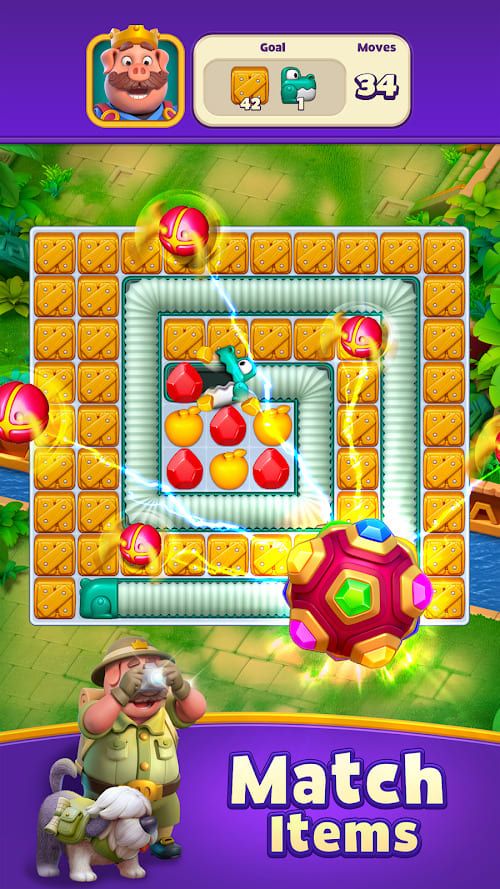
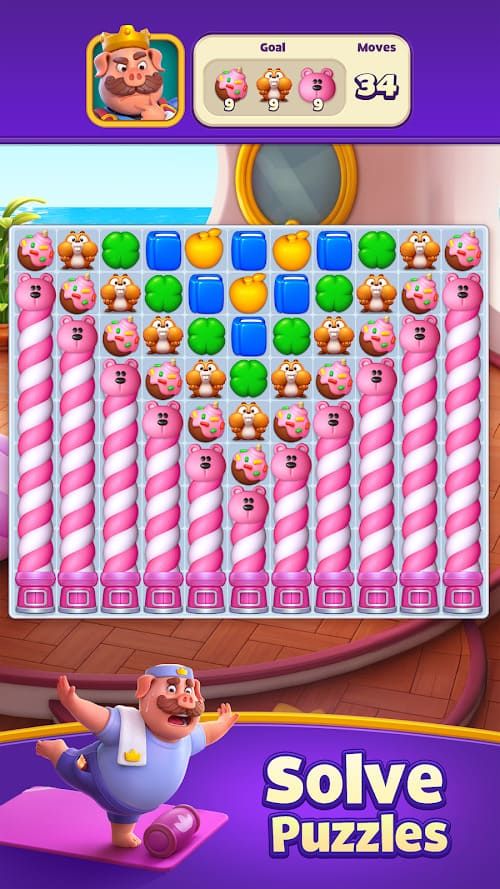
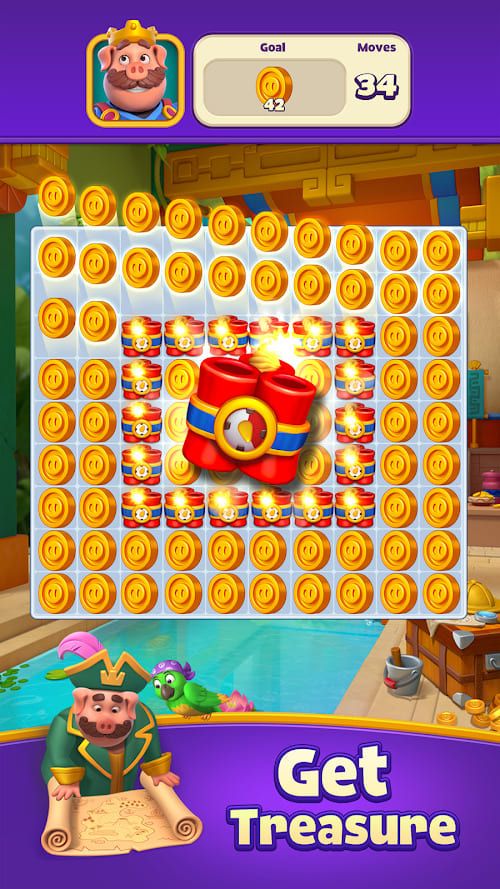
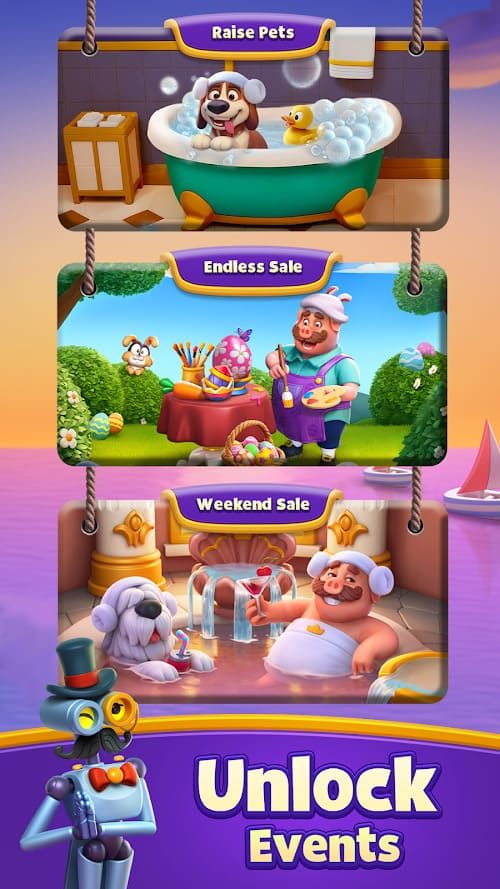
Piggy Kingdom is a combination of a match-3 puzzle and a castle renovation game where the player matches the colored objects in order to obtain stars to repair the different areas of the kingdom. Although the game starts as an almost free and fun casual game, its monetization and way of increasing the difficulty makes the experience a player journey controversial and worthy to be studied.
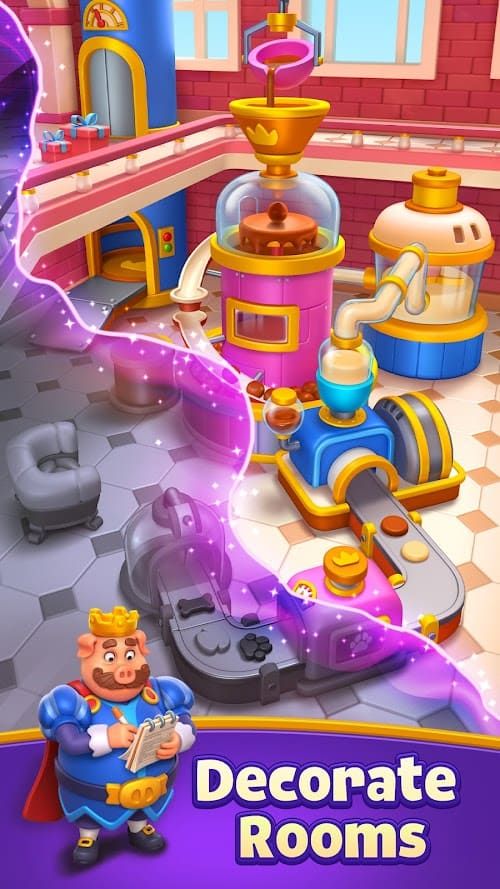
The initial experience is genuinely generous. Early levels present straightforward objectives—matching gems to break wooden boxes, clearing grass tiles, or collecting specific colored pieces within comfortable move limits. The game provides adequate starting boosters including hammers, rainbow blasts, and shuffles that help players navigate occasional challenging boards. Castle renovation progresses smoothly as stars accumulate, unlocking garden fountains, decorative shrubs, and interior furnishings like armchairs and bookshelves. This honeymoon serves as a good learning experience to the mechanics even as it develops an investment in the renovation storyline.
Nevertheless, the spikes in dramatic challenging levels have always been reported to start at about level 600 and some reported to happen at level 610 and higher. These challenging levels have some similar features: a limited number of moves to achieve the given goals, board arrangements which need a particular combination of power-ups which are hardly formed naturally, and patterns of obstacles that need several exact matches in pre-programmed sequences. The challenge does not grow slowly but instead, it leaps dramatically and changes challenges that were at one point manageable into obstacles that appear to be impossible to overcome.
The monetization advantage of this difficulty structure is transparent. By creating bottleneck levels after players have invested significant time, olleyo maximizes the likelihood of purchases. Players facing their tenth consecutive failure on a single level experience sunk-cost psychology—they've already invested hours reaching this point, making a small purchase to overcome the obstacle psychologically easier than abandoning progress. The timing is deliberate: difficult levels appear precisely when free booster reserves deplete from previous challenging stages.
This approach offers some legitimate advantages. The difficulty ensures only engaged players progress deep into content, maintaining challenge for skilled puzzle solvers. Revenue generation funds ongoing development, including new level releases and event content. Players who willingly pay support free players' access to the base game. The model theoretically creates sustainable business while maintaining free accessibility for patient, skilled, or lucky players who eventually pass difficult levels without spending.
Yet significant disadvantages outweigh these justifications. Multiple players specifically describe feeling "scammed" after reaching higher levels, using terms like "money soaker" to characterize the experience. This language indicates broken trust—players feel the early generosity was bait for later exploitation rather than representative of the overall experience. The difficulty spikes feel artificial rather than organic progression, suggesting algorithmic manipulation rather than thoughtful level design.
The technical implementation worsens monetization perception. Players report that purchased boosters and extra moves frequently fail to guarantee level completion, creating situations where spending money feels wasteful. When a $2.99 purchase for extra moves still results in failure, players question whether boards are mathematically solvable without multiple purchases. This breeds resentment rather than satisfaction with optional spending.
Additionally, forced third-party advertisements (Snazzy, Best Play, Surveys to Go) interrupt gameplay at critical moments, sometimes causing players to lose active competition progress in Cake Duel events. Combining aggressive ad monetization with purchase pressure creates a worst-of-both-worlds scenario where players feel doubly exploited—paying with both attention and money.
Piggy Kingdom's monetization and difficulty balance fails to achieve sustainable fairness. While initial accessibility successfully builds player investment, the subsequent difficulty wall and monetization pressure damage player goodwill and long-term retention. Games should challenge skill, not primarily challenge wallets. Piggy Kingdom's approach may generate short-term revenue from frustrated players but likely sacrifices the loyal community necessary for long-term success in the competitive match-3 market.
By Jerry | Copyright © JoyGamerss - All Rights Reserved


















Comments